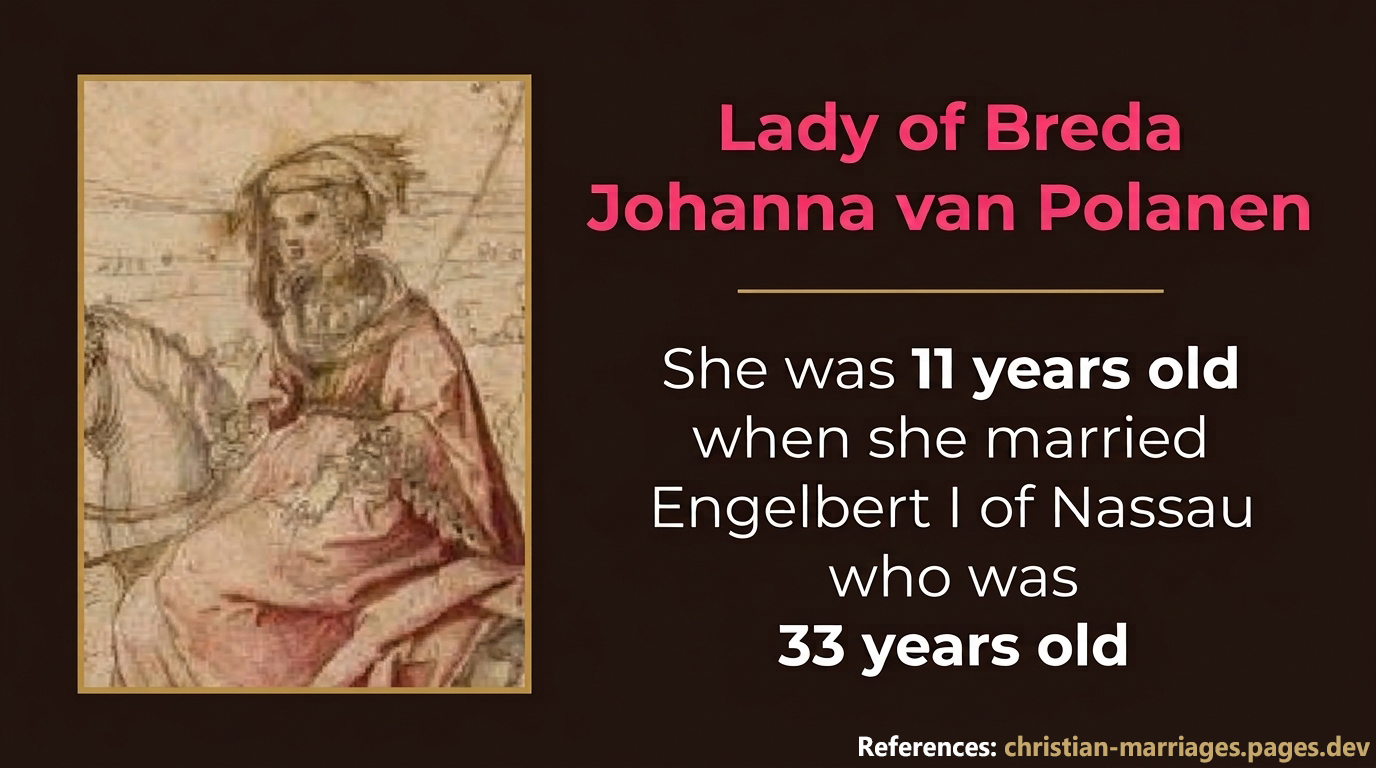
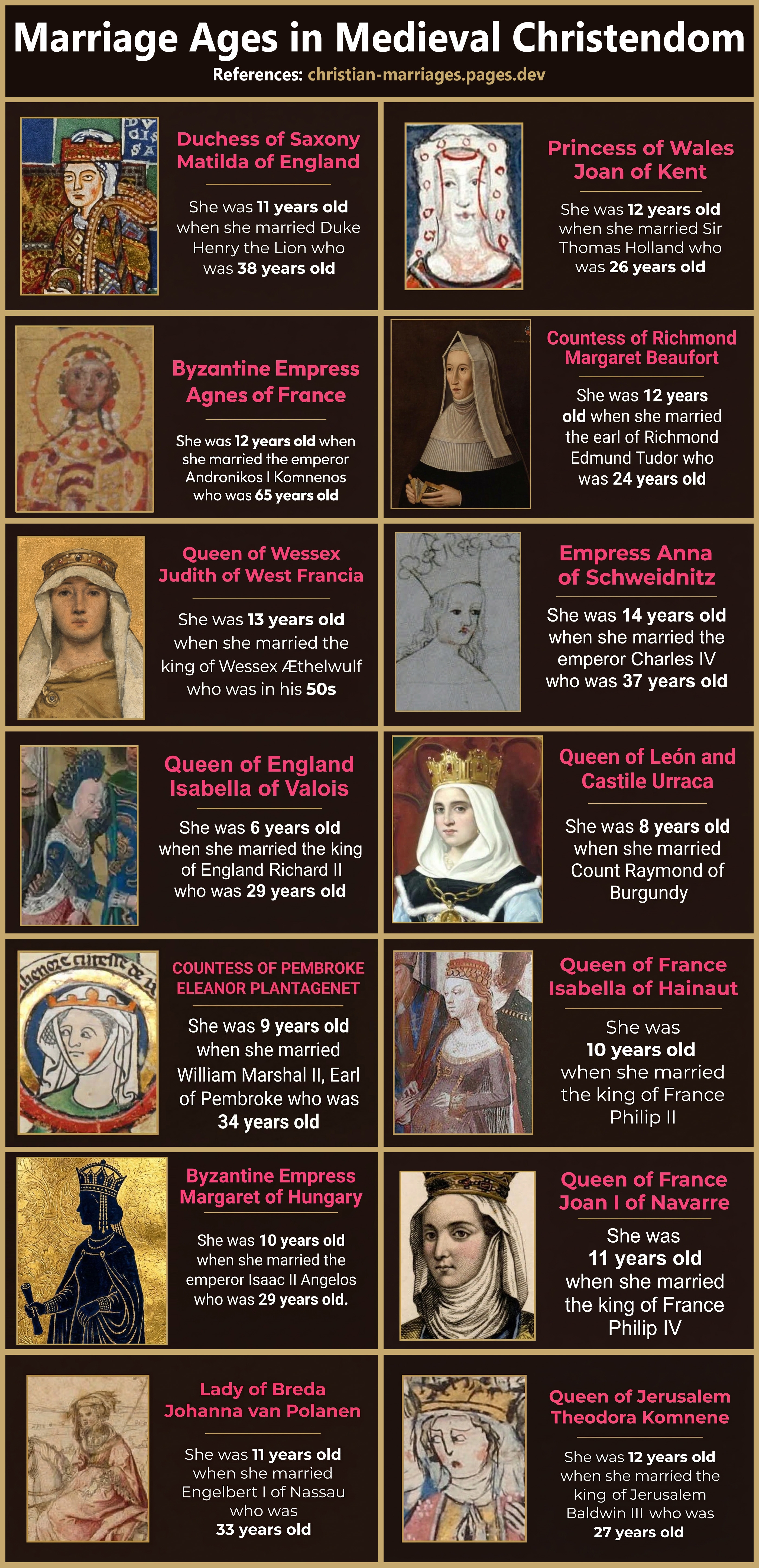
A verifiable, source-led review of fourteen historical cases illustrating marriage ages among prominent Christian figures in medieval Christendom. Each entry includes multiple reference links, with additional context on Church involvement where documented.
Click to enlarge
Search filters the cards below.
1
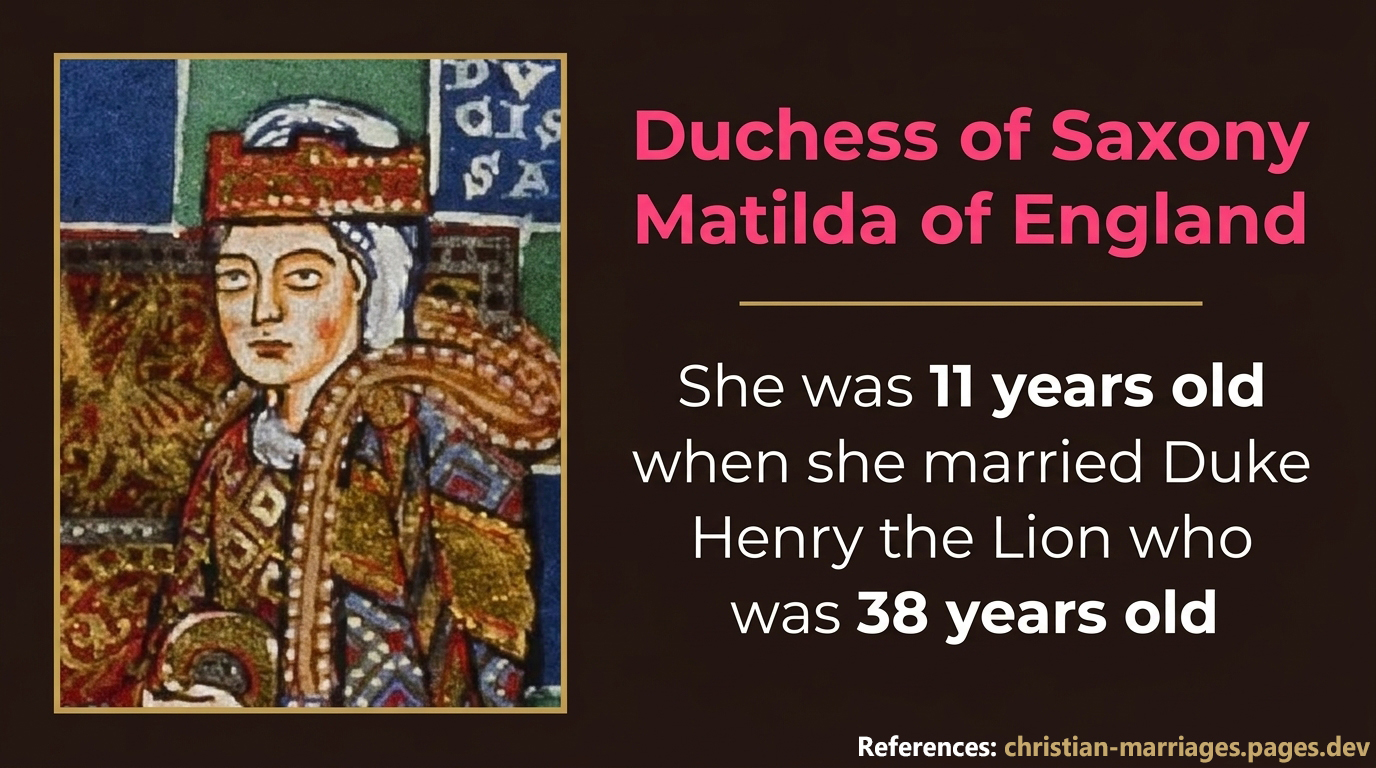
Matilda of England
Duchess of Saxony · Groom: Henry the Lion
Bride: 11–12 years old Groom: 38-39 years old
Marriage: 1168, traditionally dated to 1 February.
“Henry the Lion”EBSCO Research Starters. Gives Henry's birth year as 1129; combined with the 1168 marriage chronology in the sources above, this suggests about 38–39 depending on his birthday.
Church / clerical evidence
The Dictionary of National Biography, citing the Chronicle of the Bishops of Minden, states that Matilda and Henry were married by Bishop Werner in Minden Cathedral on 1 February 1168. This is direct evidence of episcopal officiation, rather than an assumption based on royal status.
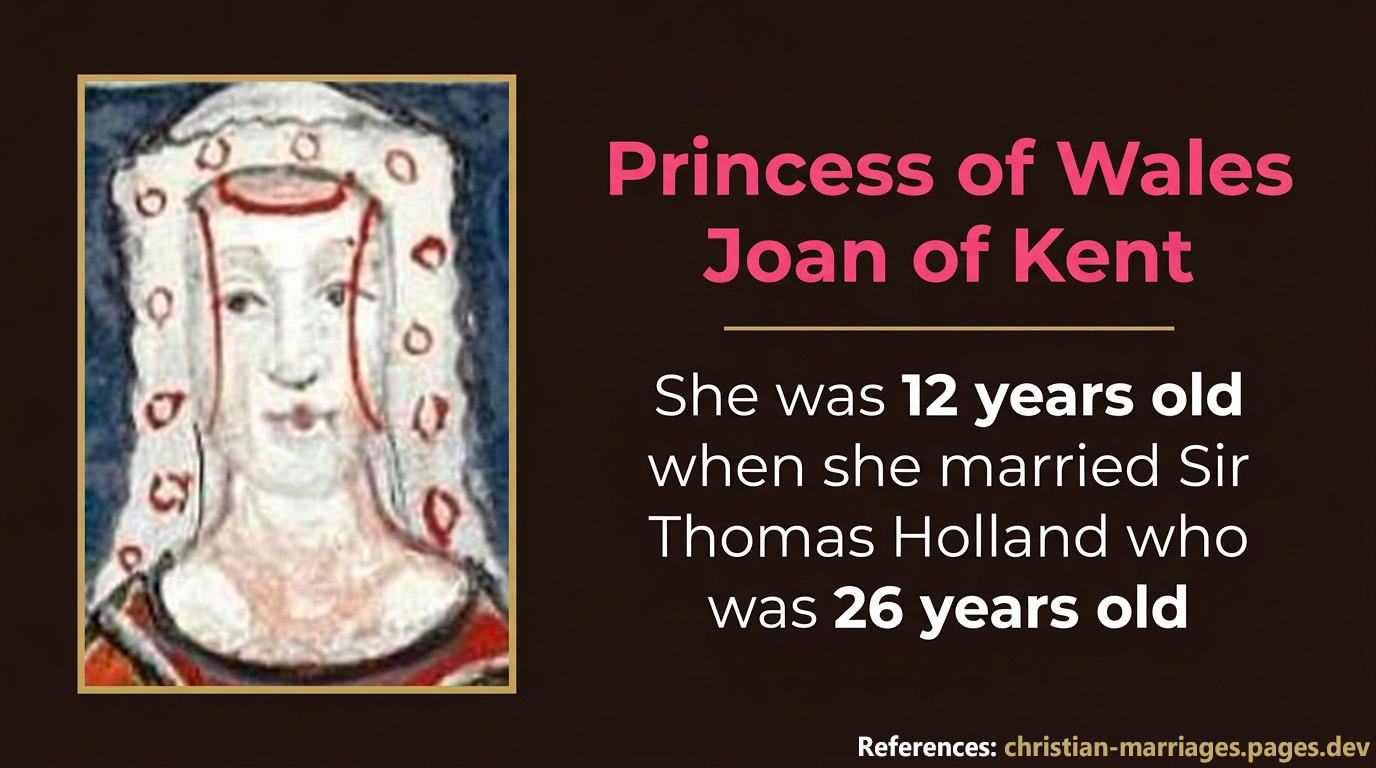
“Bigamy,” in Joan, the Fair Maid of KentCambridge University Press, 2017. Modern scholarly biography discussing the timing of Joan's first marriage and Thomas Holland's likely age.
The evidence for Church involvement is judicial. Karl P. Wentersdorf’s study, based on original documents, reports that the papal curia ruled in 1349 that Joan’s later marriage to William Montagu, Earl of Salisbury, was invalid and restored her to Thomas Holland.
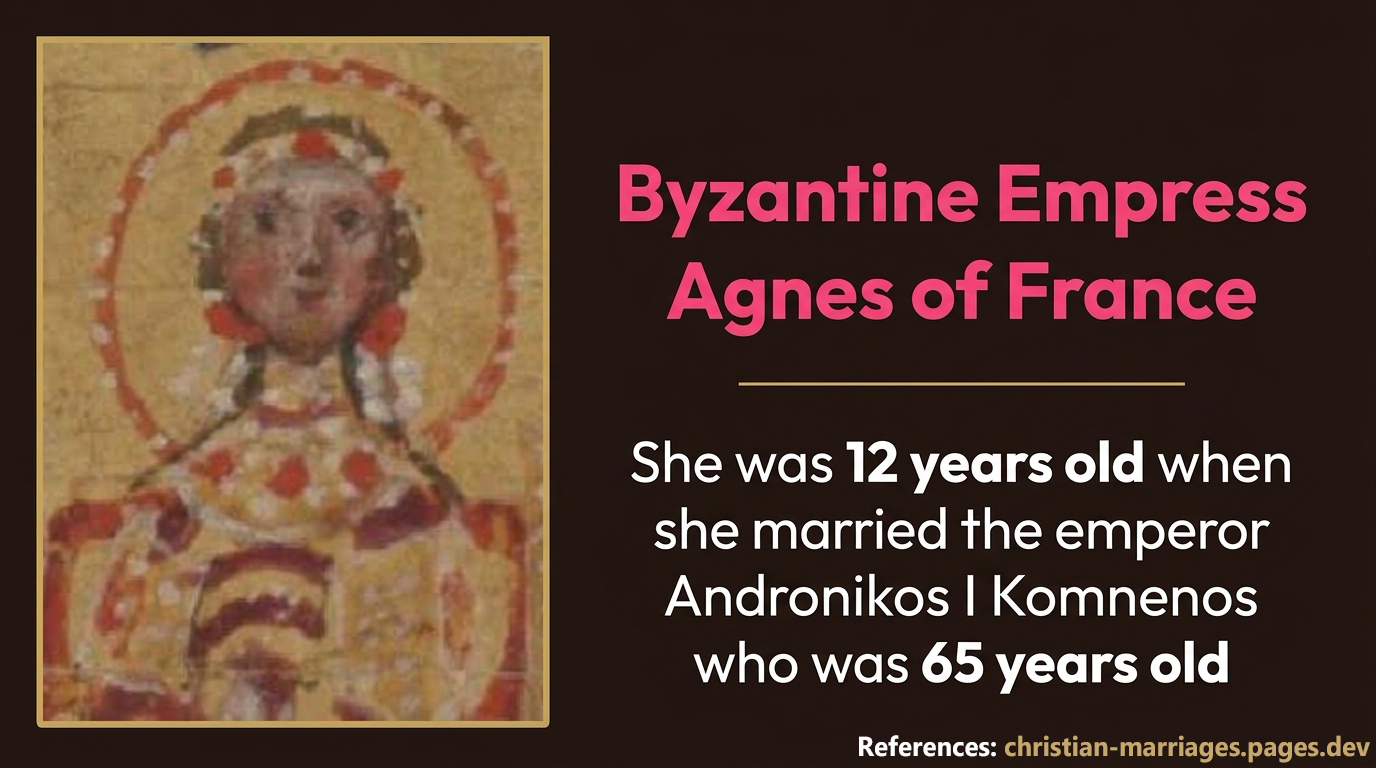
“Agnes-Anne of France (b. 1171)”Women in World History: A Biographical Encyclopedia, via Encyclopedia.com. Distinguishes her marriage to Alexios II from the 1183 marriage to Andronikos I.
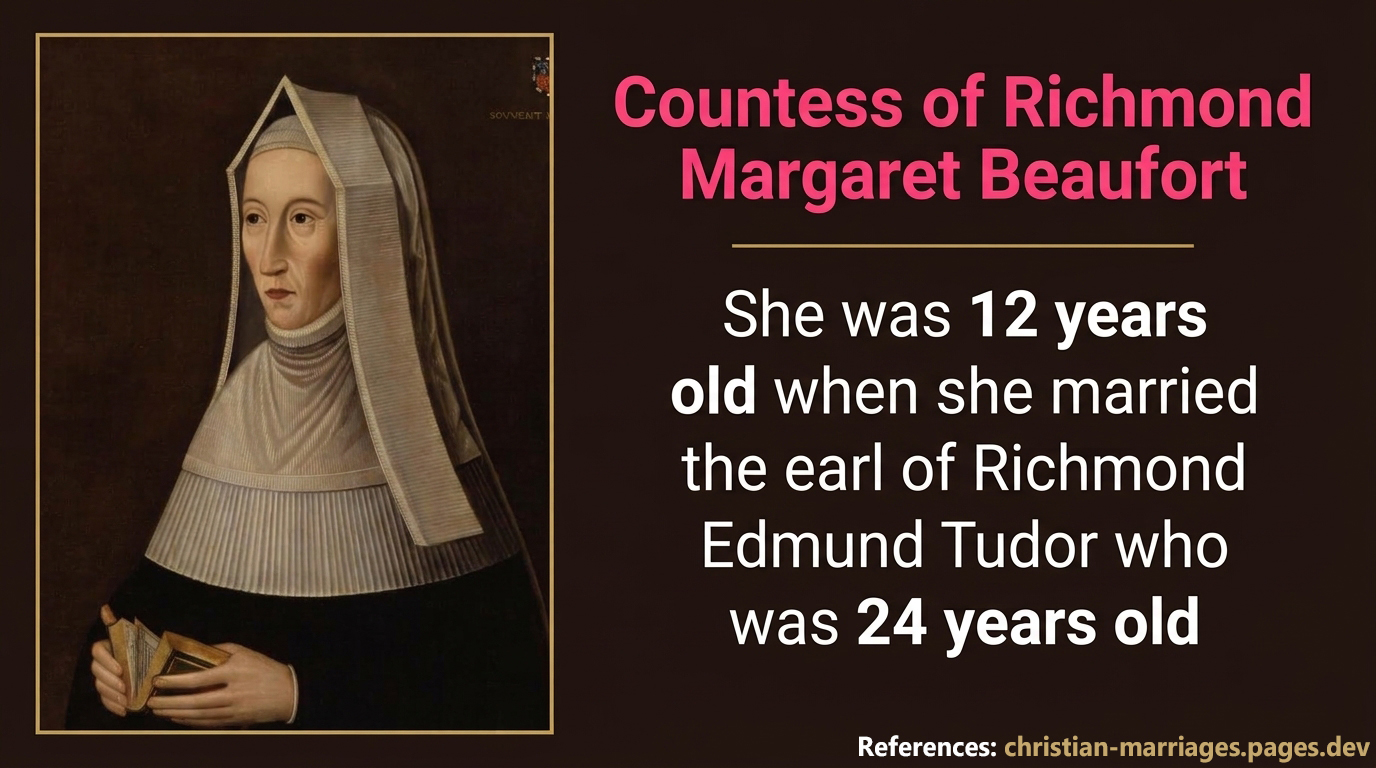
“Margaret Beaufort, Countess of Richmond”Westminster Abbey, official commemorations biography. Records her birth on 31 May 1443 and names Edmund Tudor as her second husband.
“Tudor, Edmund”Dictionary of National Biography (1885–1900), digitized text. Confirms the marriage took place in 1455.
5
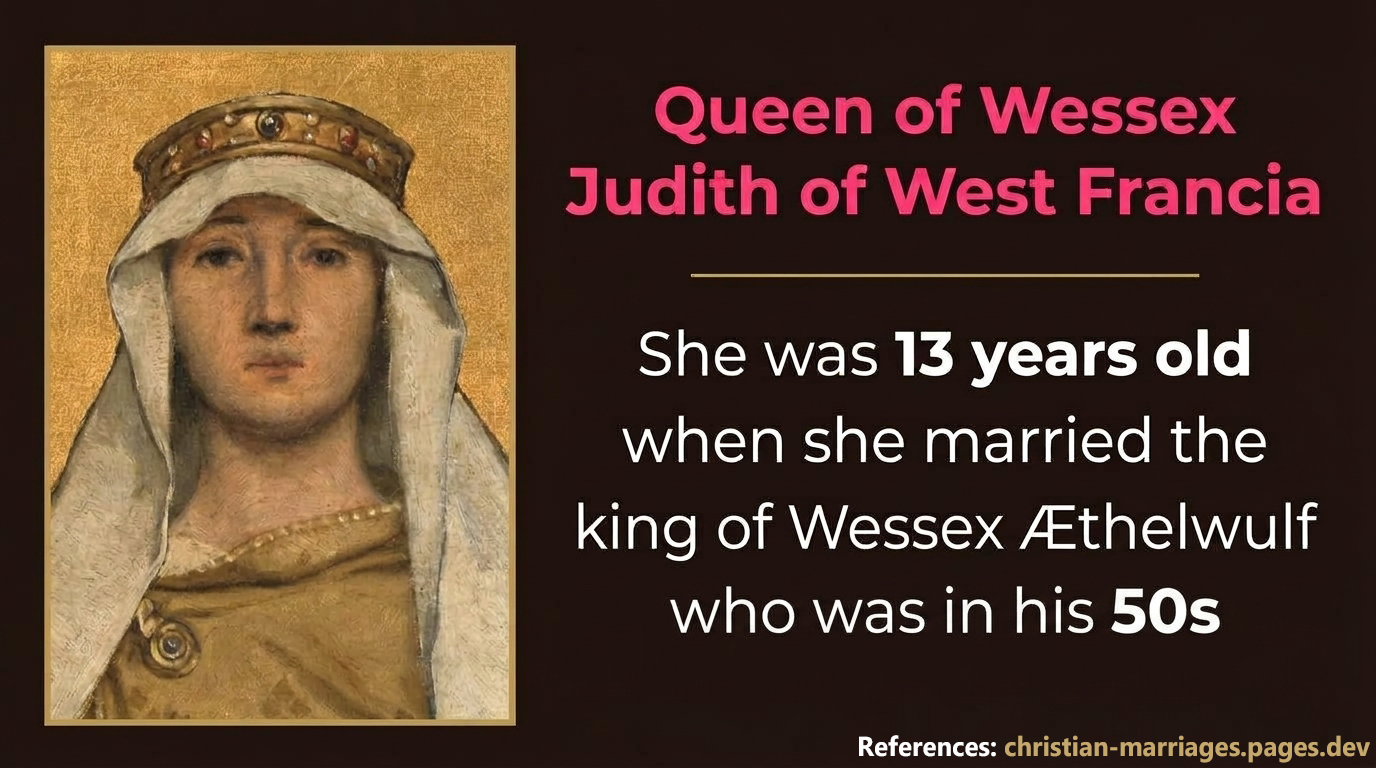
Judith of West Francia
Queen of Wessex · Groom: Æthelwulf
Bride: 12–13 years old Groom: In his 50s
Marriage: 1 October 856.
Sources
“Ethelwulf”Dictionary of National Biography (1885–1900), digitized text. Gives the 1 October 856 wedding and says Judith could not have been more than thirteen.
Geoffrey Hindley, A Brief History of the Anglo-SaxonsLittle, Brown Book Group / Robinson, 2013 edition. In the account of Æthelwulf’s return from Rome and his 856 marriage to Judith, Hindley describes Æthelwulf as “a man in his fifties.”
Church / clerical evidence
This is one of the strongest documented cases. A specific medieval Marriage and Coronation Ordo of Judith—856 survives in the scholarly edition of Ordines Coronationis Franciae and is identified as a service compiled by Hincmar, Archbishop of Reims. The Dictionary of National Biography also states that Hincmar married Æthelwulf and Judith, then crowned and blessed Judith as queen. This is direct evidence of clerical officiation and a liturgical blessing.
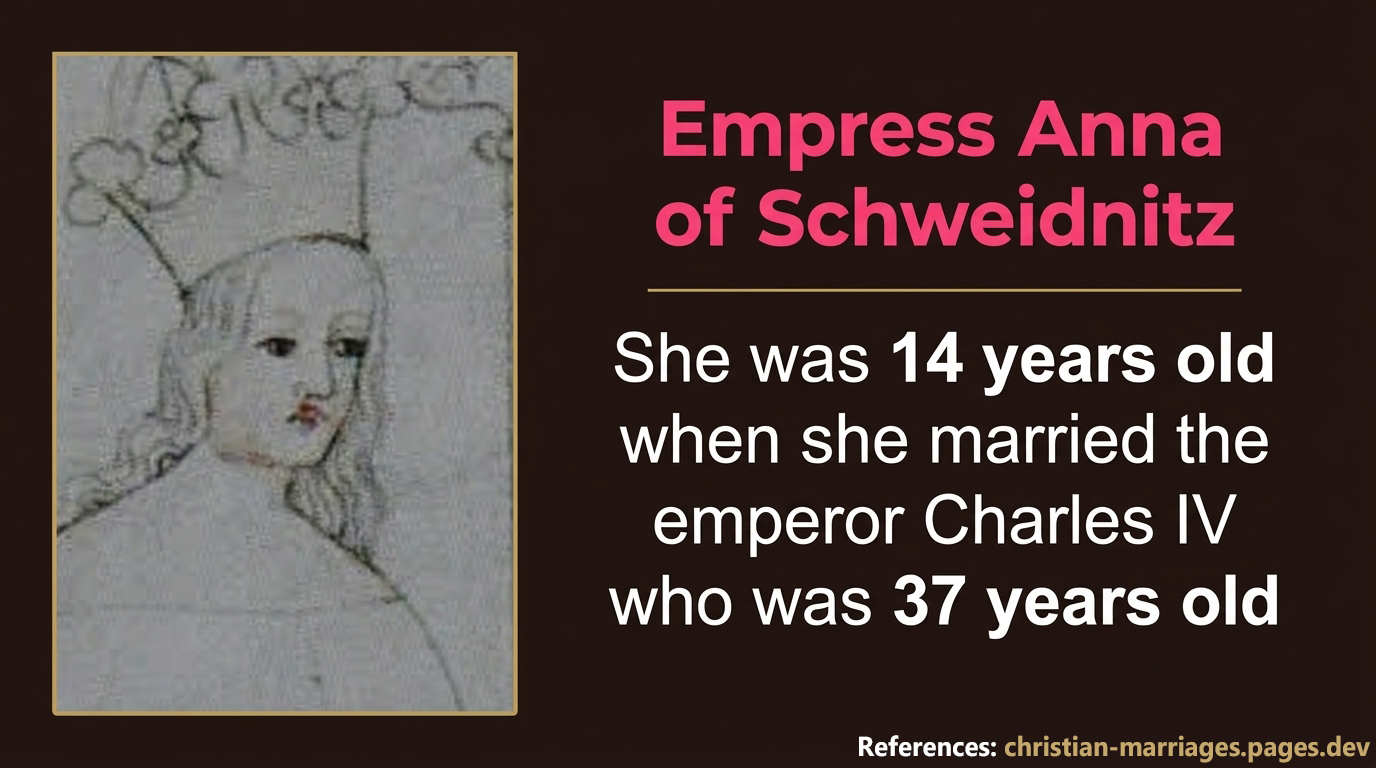
“Anna von Schweidnitz und Jauer”Deutsche Biographie, a scholarly German biographical reference. Gives birth c. 1339 and marriage at Ofen/Buda on 27 May 1353.
A scholarly article from Charles University explains that the wedding was delayed while the parties awaited a papal dispensation required because of their degree of kinship. A Charles IV research project further records that Archbishop Arnošt of Pardubice crowned Anna Queen of Bohemia on 28 July 1353. These sources support papal authorization of the marriage and later episcopal coronation.
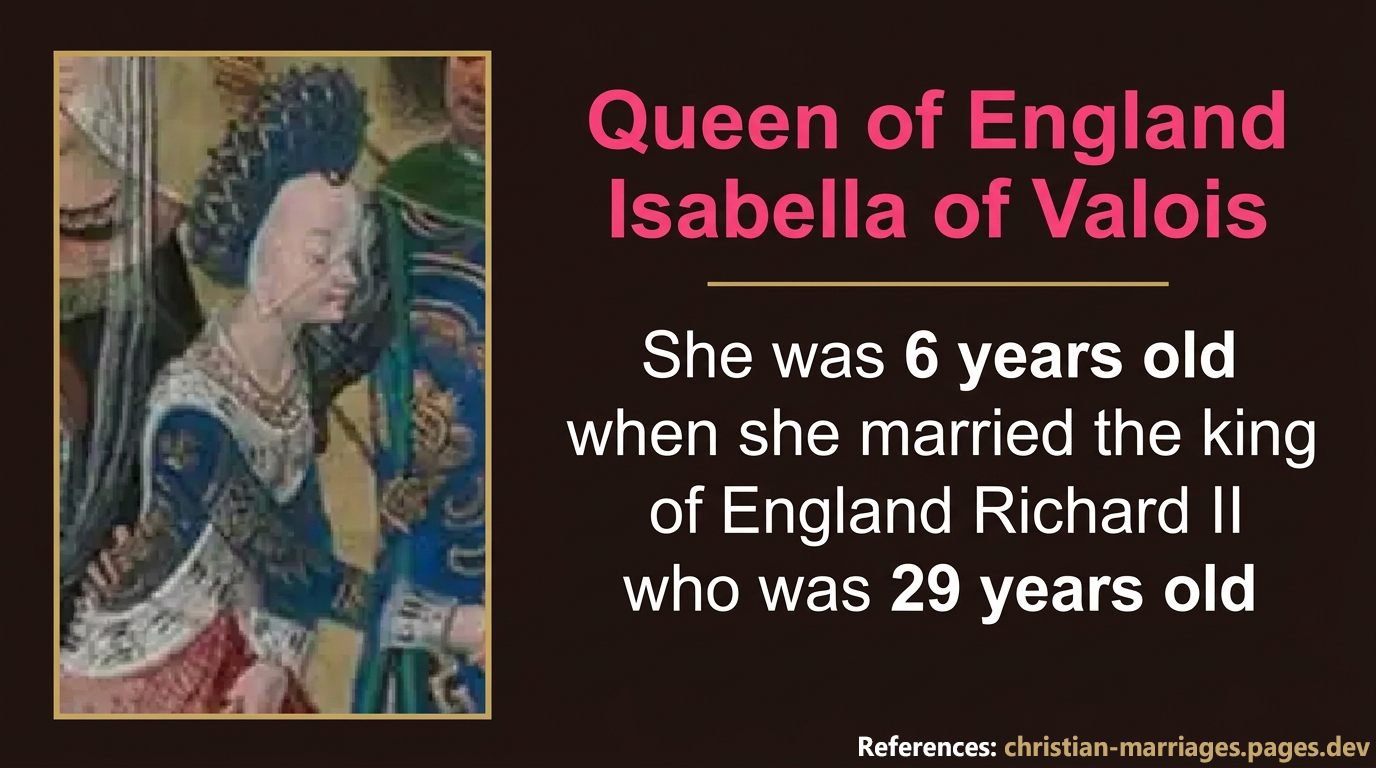
“Isabelle of France (1389–1409)”Institute of Historical Research, University of London, Richard II research project. States she was not quite seven at the 1396 wedding.
“Isabella of France (1389–1409)”Dictionary of National Biography (1885–1900), digitized text. Gives her birth date as 9 November 1389 and details the marriage negotiations.
The Dictionary of National Biography identifies Thomas Arundel, Archbishop of Canterbury, as the officiant at Richard and Isabella’s wedding in St. Nicholas Church, Calais. It also reports that dispensations were obtained from both papal claimants during the negotiations. The Institute of Historical Research confirms that the ceremony followed the agreement on a twenty-eight-year truce. This case therefore has evidence of episcopal officiation and papal involvement, not merely a general assumption about royal marriages.
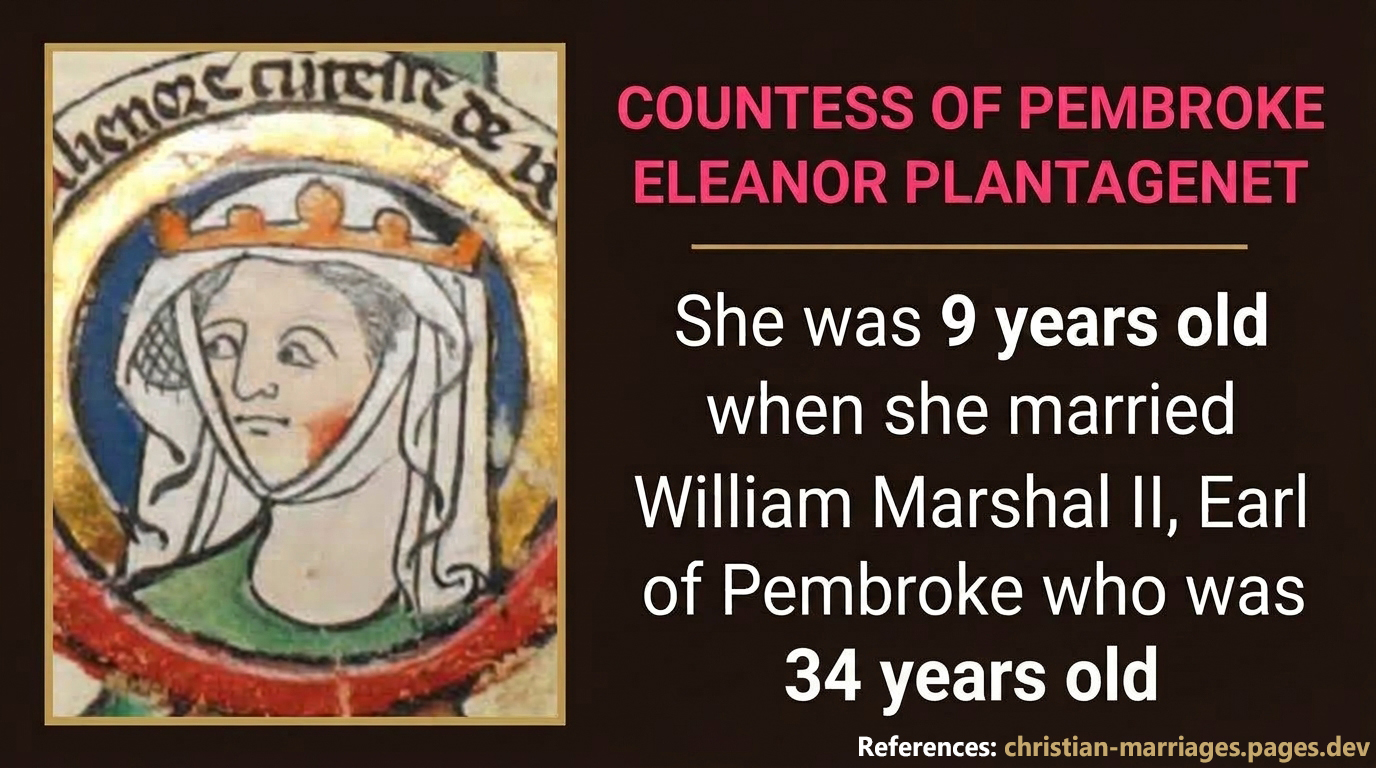
There is evidence of formal ecclesiastical involvement in the marriage contract, a contemporary royal statement published by the Royal Historical Society records a papal mandate addressed to the Archbishop of Canterbury and Bishop of Salisbury in 1222, directing them either to release William Marshal from the relevant oath conditions or to confirm the marriage contract. This supports papal and episcopal involvement in the canonical status of the planned royal match.
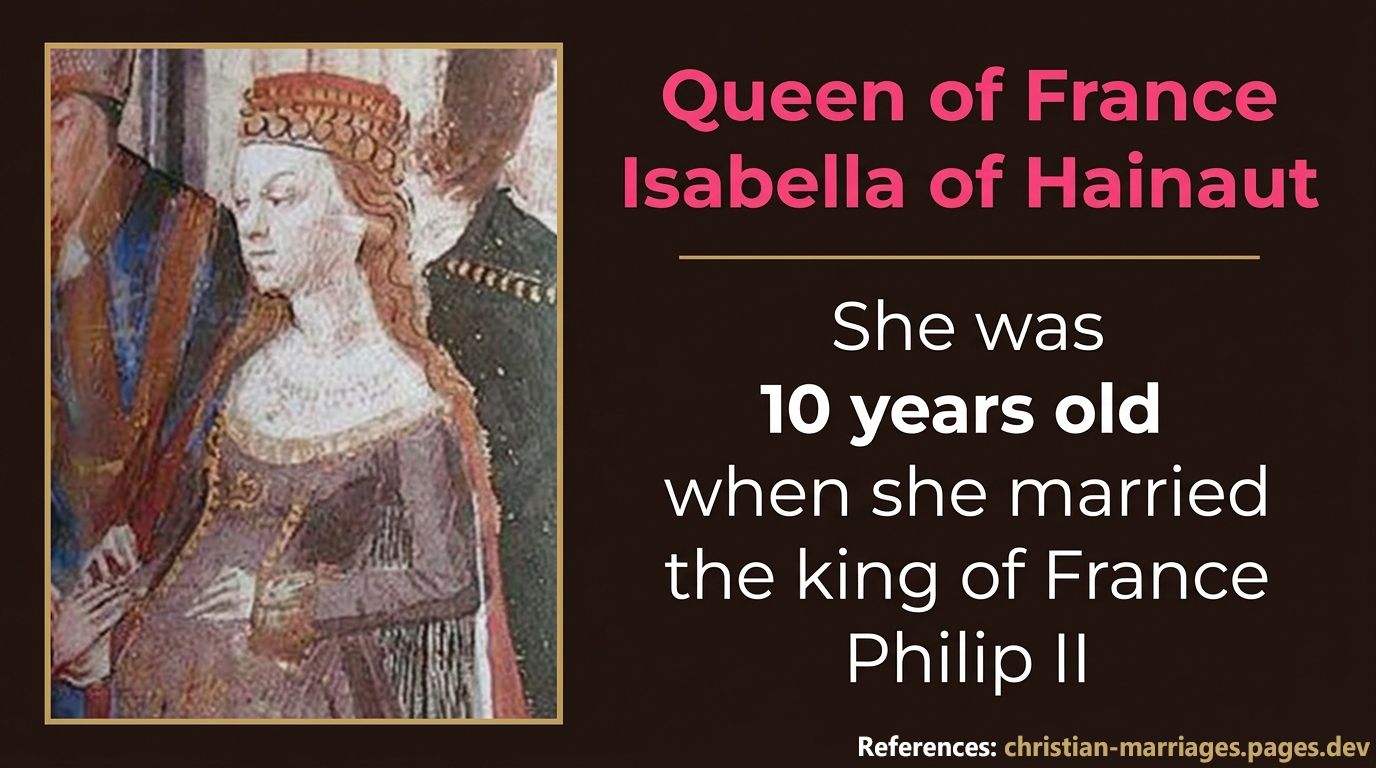
“Isabella di Hainaut, regina di Francia”Enciclopedia on line, Istituto della Enciclopedia Italiana (Treccani). Records birth in 1170 and marriage to Philip Augustus in 1180.
“Isabella of Hainaut”Encyclopædia Britannica, 11th edition (1911), digitized text. Independent reference account of her birth and marriage.
Church / clerical evidence
A scholarly edition of Rigord’s account records that Philip and Isabella received a nuptial blessing from bishops in the abbey of Tronc-Bérenger (Arrouaise); the festivities followed at Bapaume. Secondary summaries differ over the second bishop’s see (Sens or Laon), so the safest conclusion is that an episcopal nuptial blessing is attested.
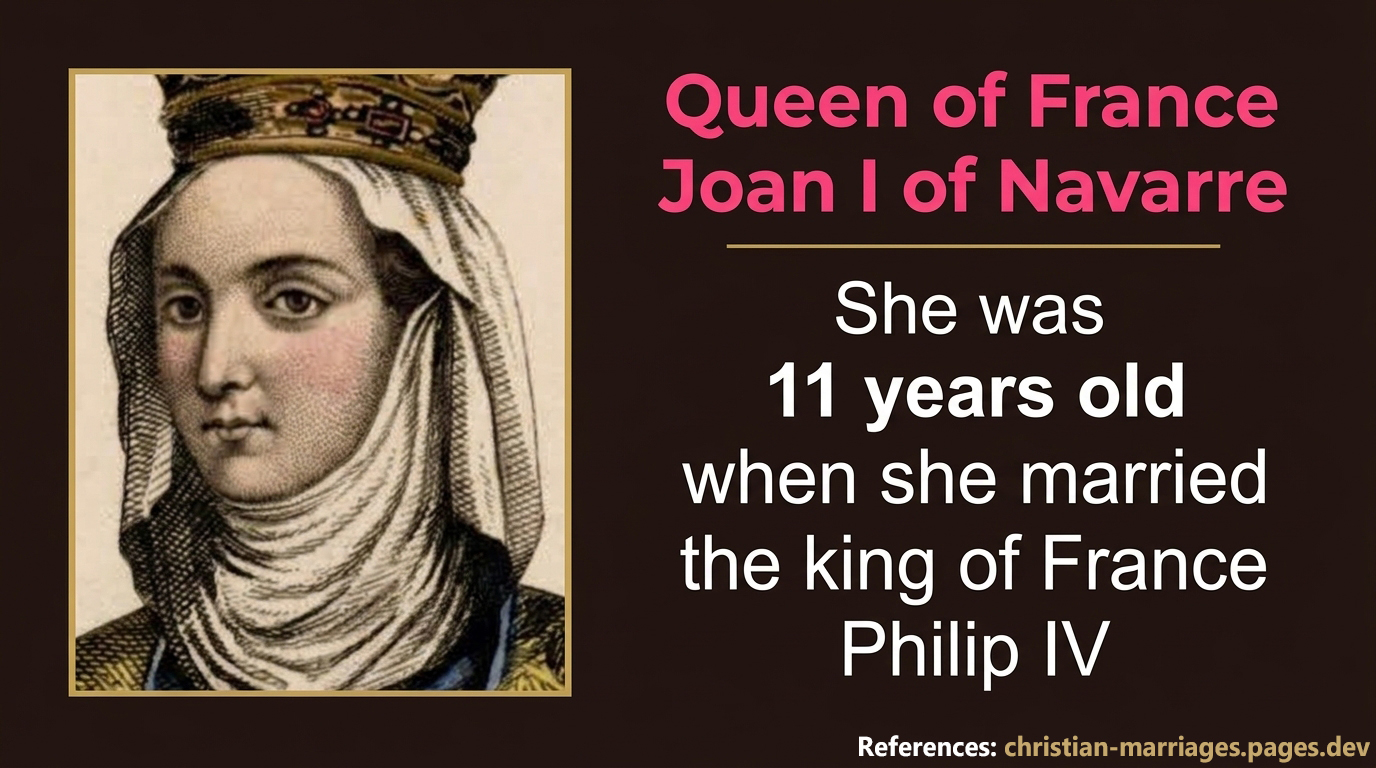
Kathryn Warner, Isabella of France: The Rebel QueenHistorical biography, Amberley Publishing, 2016, p. 34. Identifies Joan of Navarre as eleven years old when she married the future Philip IV of France on 16 August 1284.
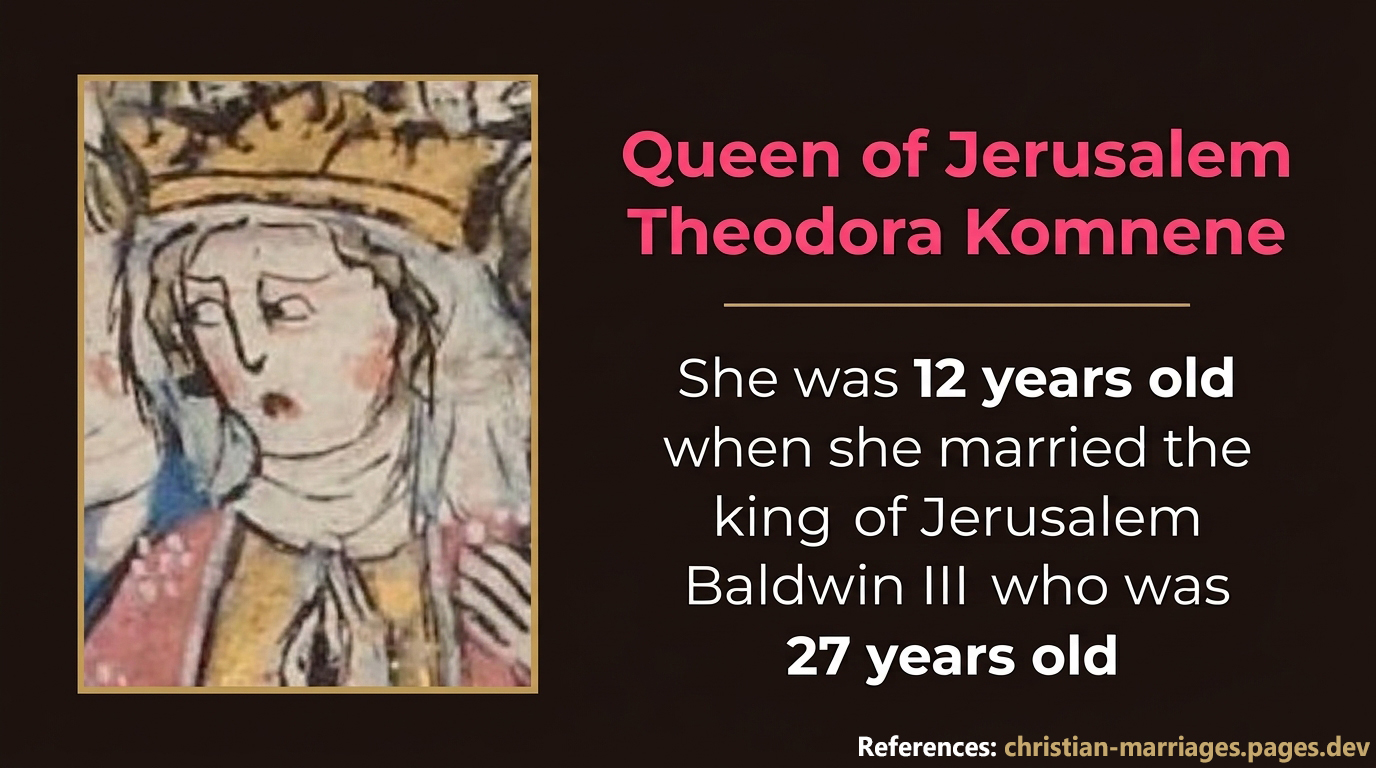
“Theodora Comnena (1145–after 1183)”Women in World History: A Biographical Encyclopedia, via Encyclopedia.com. States that she was thirteen when she married Baldwin III in 1158.
A biographical reference identifies Aimery of Limoges, the Latin Patriarch of Antioch, as the cleric who celebrated the marriage of Theodora and Baldwin III in 1158.